RepRisk counted 28 percent more companies linked to greenwashing this year, and the scrutiny is moving to the sectors building the transition. In Europe, a claim without evidence is now simply banned.
Key Takeaways
For two years the conventional wisdom held that companies had gone quiet on sustainability to avoid greenwashing accusations. The quiet has not lowered the count. A new five-year review from RepRisk finds more companies linked to misleading environmental claims than a year ago, and the exposure is moving toward the industries the energy transition depends on. At the same moment, the EU has stopped treating vague green marketing as a gray area. Since September 27, a claim a company cannot substantiate is not a reputational risk in Europe. It is a prohibited commercial practice.
RepRisk's report, released October 6, counts 1,594 companies linked to greenwashing in the year to June 2026, a 28 percent increase that follows a 12 percent decline in 2024. Greenwashing risk incidents rose 112 percent across the five-year period. The data firm defines greenwashing broadly, as environment-related communications or actions that do not fairly reflect a company's environmental performance, whether through omission, falsehood or deception.
The sector mix is what has changed. Alternative energy, industrial metals, mining, software and computer services, and utilities accounted for 29 percent of environmental issue linkages in 2026, up from 18 percent in 2022, while oil and gas fell from 17 percent to 12 percent. RepRisk notes that claims by AI companies and data centers about renewable power and carbon-free operations have drawn more scrutiny. Financial services remained the most exposed sector, with 305 companies linked, up 40 percent. Banks added 86 more, and together the two account for one-fifth of all sector linkages.
Climate is no longer the only subject under review. Ecosystems and biodiversity linkages nearly doubled from 162 in 2024 to 300 in 2026, overtaking climate change and emissions, which held roughly flat at 275. "Biodiversity and nature has definitely moved up the investor regulatory and corporate agenda over the last few years," RepRisk's Alexandra Mihailescu Cichon told ESG Dive. Chief executive Philipp Aeby framed the stakes for capital: "The transition depends on informed capital allocation."
The regulatory backdrop shifted a month ago. The Empowering Consumers for the Green Transition Directive, which amends the EU's unfair commercial practices rules, has applied since September 27 with no transition period, according to a Mayer Brown review published October 27. Generic claims such as "environmentally friendly," "green" or "eco" are banned unless the trader can show recognized excellent environmental performance, such as EU Ecolabel compliance. Sustainability labels must rest on a certification scheme or come from public authorities.
Two provisions reach well past packaging copy. Product-level climate neutrality claims based on offsets are permitted only when they reflect the product's actual lifecycle impact within its own value chain. Future performance claims, such as a carbon neutrality pledge, are judged case by case and must rest on clear, verifiable commitments in a realistic implementation plan, checked regularly by an independent third-party expert. The rules also cover products and packaging already manufactured or in distribution, though stickers or point-of-sale fixes may be accepted instead of recalls.
Enforcement will not be uniform. Eight member states, Bulgaria, the Czech Republic, Malta, Poland, Portugal, Slovenia, Spain and Sweden, had not transposed the directive by the application date, and France's measure was still in progress, leaving nine markets without national rules. Hungary notified its measure on September 27 itself. Penalties, competent authorities and whether competitors or consumer groups can sue are all left to national law, so a company selling across the bloc faces one standard enforced many different ways.
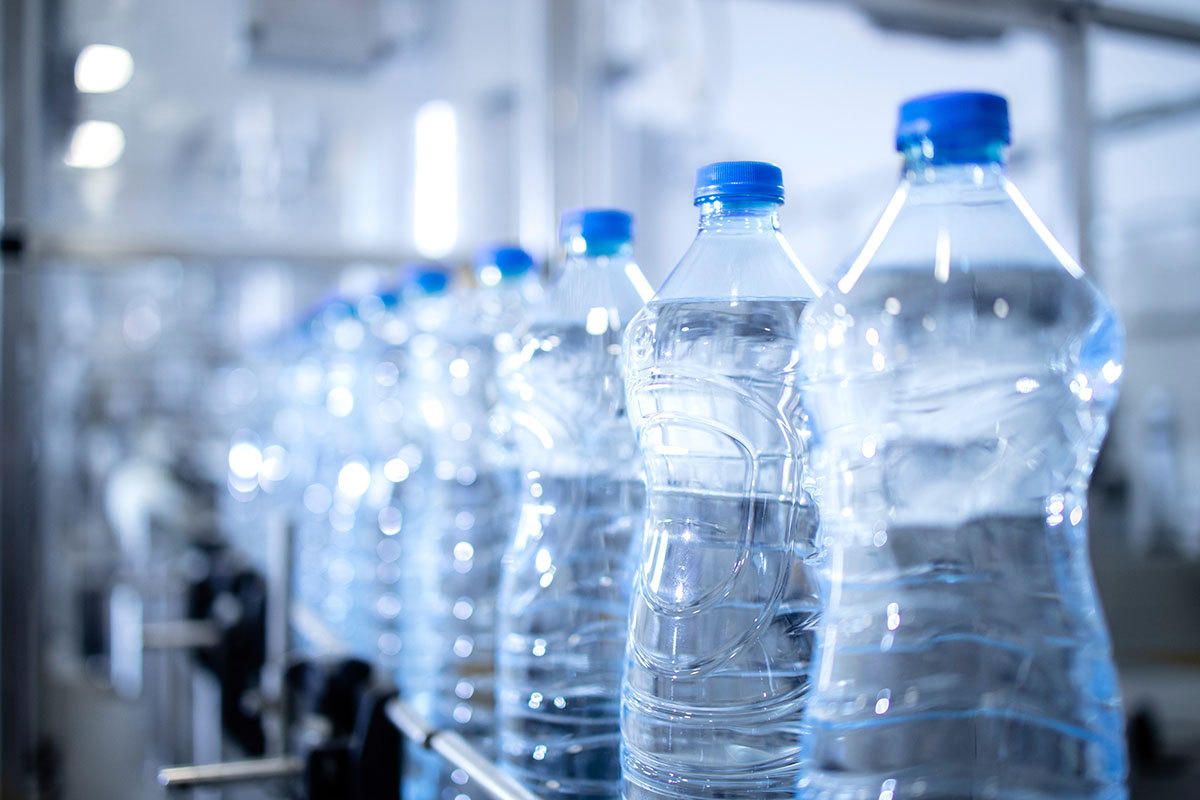
The clearest preview of how claims will be tested came from bottled water. On October 22, consumer group BEUC announced that Danone had agreed to change its labeling, making it the last of three companies named in a complaint that BEUC and member groups from 13 countries filed in November 2023, after Coca-Cola and Nestlé. Consumer authorities in Hungary and Sweden coordinated the action. All three now specify that "100%" recycled claims exclude the cap and the label, and they will avoid imagery suggesting a closed recycling loop.
The case turned on supply chain facts, not slogans. BEUC noted that EU law prevents bottle lids from being made of recycled material, that labels are rarely recycled, and that virgin plastic is often added to bottle bodies. It puts the EU recycling rate for PET bottles at 55 percent, and the chance of a bottle becoming a bottle again at around 30 percent. "Presenting a bottle as 100% recycled or recyclable is simply misleading and must stop," said Director General Agustín Reyna. A claim that holds for one component and fails for the whole product is exactly the kind the new directive was written to catch.

Guide
The bottle cases turned on what suppliers could actually prove about caps, labels and recycled content. Sedex's guide shows how supplier data can back the sourcing and disclosure claims that ESG laws now test.
Download

Guide
With nine EU markets missing national rules on the day the directive applied, tracking requirements country by country is now a real cost. Enhesa's guide sets out how to make the financial case for regulatory intelligence to leadership.
Download

Report
Once an unproven green claim is a prohibited practice, signing it off becomes legal risk management, not a marketing call. Icertis examines how legal operations teams are widening their role in enterprise risk.
Download
ESMA's 2026 enforcement priorities tell regulators to check whether negative impacts get equal billing and whether 1.5 degree targets are explained. The revised ESRS cut mandatory datapoints by more than 60 percent, but not the scrutiny.

Eight justices heard Suncor v. Boulder County on October 5 and looked split, with a ruling expected by mid-2027. Whatever they decide, a deception theory that turns corporate climate statements into evidence could outlive the case.
